
BRICS has emerged as a key platform for coordinating economic policy among major emerging economies. It serves as the principal forum where these nations shape a common position on global governance. Through sustained dialogue, it has become a channel for advancing the interests of the Global South within multilateral institutions. Its agenda spans development, finance, technology, trade and people-to-people exchanges. The grouping reflects the growing economic weight and aspirations of emerging economies globally. It provides members with a platform to share experiences and address common challenges.
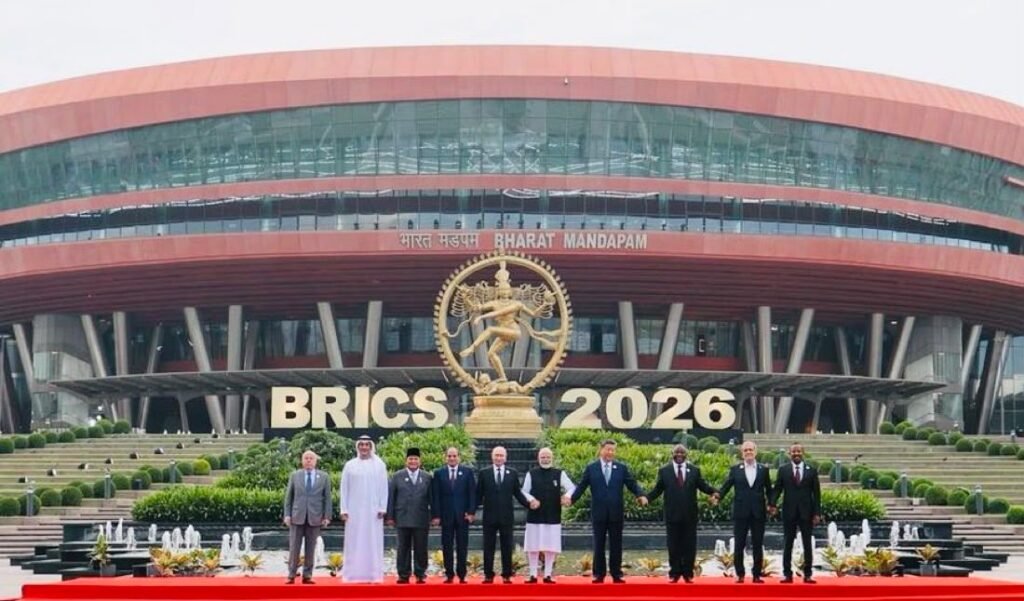
Under its 2026 Presidency, India hosted the 18th BRICS Summit in New Delhi on 12–13 September 2026, marking India’s fourth Chairship of BRICS in 2026. India’s Chairship is guided by the theme “Building for Resilience, Innovation, Cooperation and Sustainability.” The theme reflects India’s focus on strengthening existing achievements and institutional effectiveness.
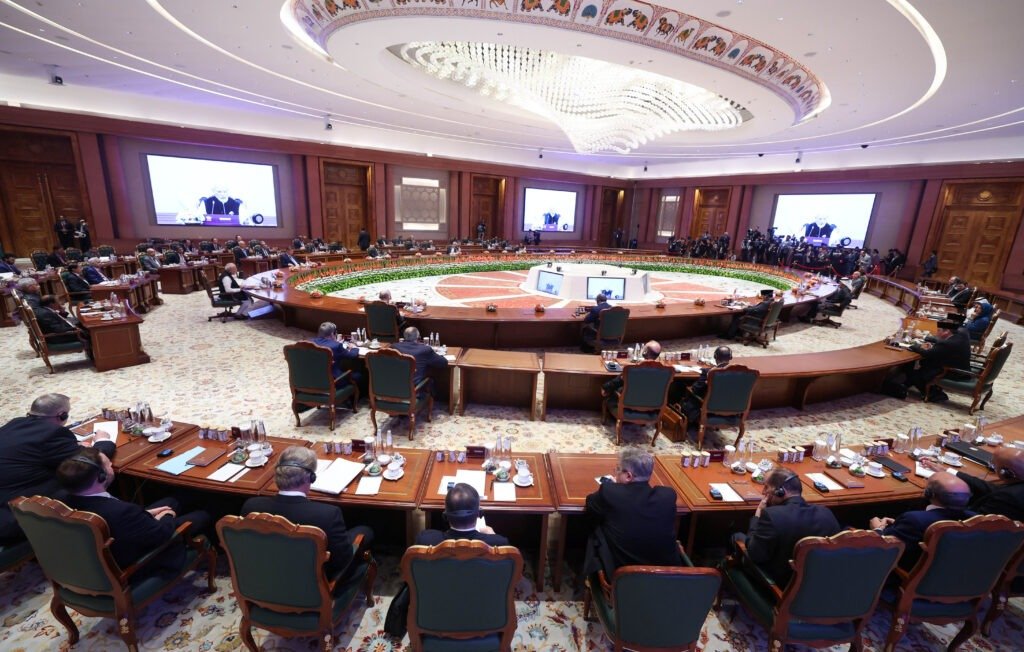
At the two-day summit, BRICS leaders unanimously adopted the New Delhi Declaration, outlining their shared priorities and commitments across key areas of global governance, trade, finance, health, food security, energy and sustainable development. The key takeaways are highlighted below:
The leaders reaffirmed commitment to the BRICS spirit of mutual respect and understanding, sovereign equality, solidarity, democracy, openness, inclusiveness, collaboration and consensus. They recognised the valuable contribution of partner countries to BRICS cooperation, and underscored a strong belief that advancing the BRICS partnership with Emerging Markets and Developing Countries (EMDCs) will further contribute to strengthening the spirit of solidarity and international cooperation for the benefit of all.
Bearing in mind the need to adapt the current architecture of international relations to better reflect the contemporary realities, the leaders reiterated commitment to strengthening multilateralism and multipolarity and to upholding international law, including the Purposes and Principles of the Charter of the United Nations (UN) in their entirety and interconnectedness in a balanced and inclusive manner.
The leaders reiterated commitment to ensuring greater and more meaningful participation and representation of EMDCs, as well as Least Developed Countries (LDCs), especially from Africa, Asia and Latin America and the Caribbean, in global decision-making processes and structures and making them better attuned to contemporary realities.
The leaders reaffirmed the commitment to working tirelessly for the implementation of the 2030 Agenda for Sustainable Development and its far-reaching and people-centred Goals and targets in a balanced and integrated manner, in line with national policies and regulations, and recognize that eradicating poverty in all its forms and dimensions, including extreme poverty, is the greatest global challenge and an indispensable requirement for sustainable development.
The leaders reaffirmed the BRICS Rio de Janeiro Vision for IMF Quota and Governance Reform and the need for a strong, quota-based and adequately resourced IMF at the centre of the global financial safety net to effectively support its members, particularly the most vulnerable countries. They urge entry into effect of the quota increases agreed under the 16th General Review of Quotas (GRQ) with no further delay and call for the development of approaches to meaningful quota realignment under the 17th GRQ at the earliest.
BRICS reaffirmed its commitment to reforming and strengthening the WTO and maintaining an open, fair, transparent and rules-based global trading system, while protecting the interests of developing countries through principles such as MFN and Special & Differential Treatment. It called for the immediate restoration of the WTO’s two-tier dispute settlement mechanism, greater coordination among BRICS members on WTO reforms, and the development of new trade rules. BRICS also supported Ethiopia and Iran’s WTO accession and highlighted China’s expansion of zero-tariff treatment to 53 African countries, reflecting its broader push to strengthen the participation of the Global South in global trade.
The leaders collectively recognised that obesity and non-communicable diseases (NCDs) have emerged as major global public health challenges and reaffirmed commitment to strengthening preventive and promotive healthcare through whole-of-government and whole-of-society approaches. In this regard, they endorsed the launch of the BRICS Mission for Healthy Lifestyle and the BRICS Roadmap for the Joint Initiative on Healthy Lifestyle Promotion (2026–2029).
BRICS members emphasized the importance of food security, sustainable agriculture and stable food prices, given its major role in global food production. Key priorities include developing a BRICS Grain Exchange to facilitate agricultural trade, strengthening food reserves and climate-resilient farming, improving intra-BRICS trade and supply chains for food and fertilizers, and supporting small farmers, fishers, indigenous communities, women and youth in agriculture.
The leaders recognized energy security as a crucial foundation for social and economic development, national security and the welfare of all nations. They highlighted the need to enhance energy security by ensuring energy market stability and maintaining undisrupted flows of energy from diverse sources, strengthening value chains, ensuring resilience and protection of critical energy infrastructure, including cross-border infrastructure. They also supported a just, orderly and inclusive energy transition, while recognizing that fossil fuels will continue to play an important role for developing economies.
BRICS members also addressed the challenge of modernizing energy systems through digitalization. They highlighted the use of AI and advanced data analytics to improve grid management, renewable-energy integration, efficiency and cybersecurity, and welcomed cooperation on smart grids and energy storage through the proposed BRICS Digital Centre of Excellence.
Source: PIB